Should Christians Be Tolerant?
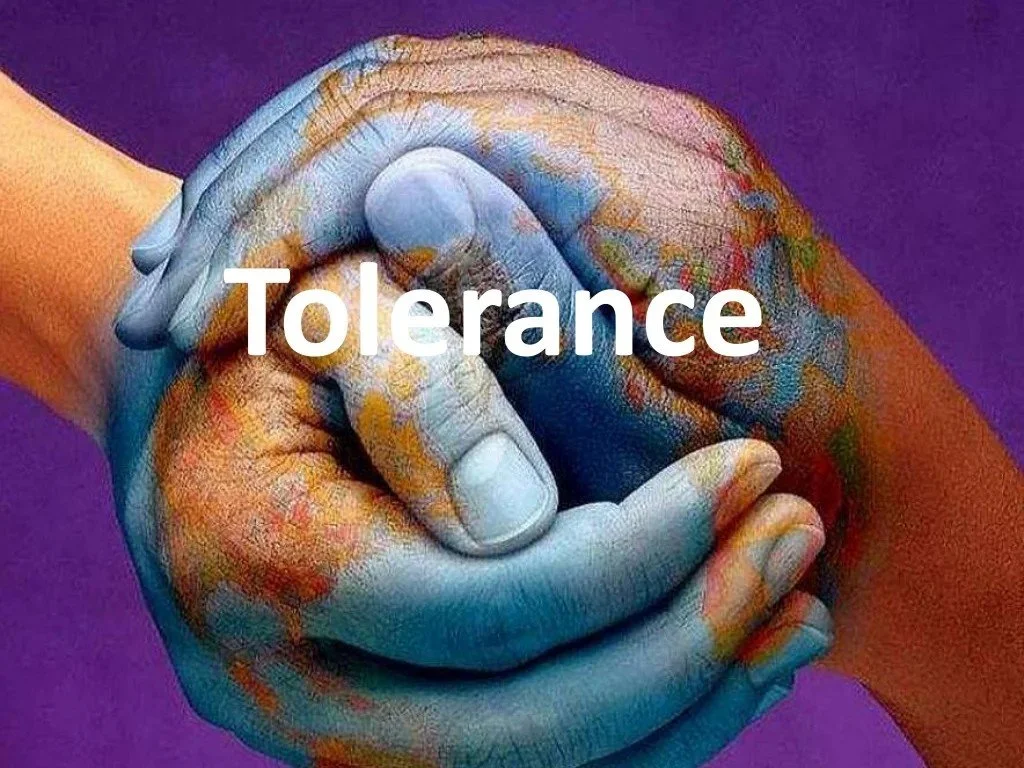
If you regularly read our articles on our Prodigal Missions website, thank you for your patience. We have been working on our next book, Ministering with the Son, which we hope to publish soon, so we haven't had as much time to focus on our monthly articles. However, the Lord has recently impressed upon us His urgent desire that we release part of the new book now, rather than waiting until after it is published. This article is the part of the book He has asked us to share.
Through many dreams, visions, and by the Holy Spirit, the Lord has shown us that this nation will soon face many trials and tribulations, greater than any we have already faced. I know many people, both in and outside of the Church, who believe we will be spared from this suffering and have even found voices to encourage them in their belief, as Paul told Timothy in 2 Timothy 4:3-4, “For the time will come when they will not tolerate sound doctrine; but wanting to have their ears tickled, they will accumulate for themselves teachers in accordance with their own desires, and they will turn their ears away from the truth and will turn aside to myths.” I won’t take the time right now to explain why they are being deceived, because we have written about it many times over the last few years. You can find the answers in our previous posts or books if you want to read them, or, if you are already filled with the Holy Spirit, you can pray and ask Him yourself to reveal in Scripture what is about to take place on the earth.
The Lord has used me to write about many things these past few years, but now, with so little time remaining, He has emphasized to me the importance of sharing His mercy and grace with anyone willing to listen. As I was writing this article, I wasn't surprised to learn that the “International Day of Tolerance” is on November 16, 2026. Many people in the world, and some even within the Church, struggle to understand the words “tolerance” and “mercy.” We believe the Lord wants us to address the false belief that tolerance is a Christian virtue and that one should not call oneself a Christian if one cannot tolerate others. God wants us to understand that His mercy exceeds all human tolerance because it offers an escape from what is coming, whereas tolerance only blinds us to the truth.
Did Jesus teach us to tolerate others, or were His words more about loving others and showing mercy? Are tolerance and mercy the same thing? Today, the terms “tolerance” and “mercy” are often used in religious and government circles in ways that blur their true meaning and make them seem synonymous, but that couldn't be further from the truth. Many people today confuse these two words, sometimes even defining “mercy” as part of their understanding and promotion of “tolerance.” Jesus taught us to love others, showing them mercy and forgiveness rather than judgment and punishment, but no Scripture supports the belief that we should tolerate anything or anyone who stands in opposition to God. In fact, Scripture instructs us quite the opposite.
This nation’s founding fathers envisioned a separation of Church and State, but many do not understand the context in which they wrote those terms. We will not take the time here to discuss their true motives, but it doesn’t take much research to see that they wanted the State to stay out of the Church, not the other way around. Instead, over the years, there have been attempts to remove Jesus Christ from our public lives, while maintaining the idea that intolerance is evil, and any true Christian must also believe and understand this as truth. I have heard people go so far as to say that if we are not tolerant, we do not understand what it means to be a Christian. The literal definition of “Christian” means to be Christ-like. If we are to be like Jesus Christ, we should know what He thinks about tolerance and mercy.
The word “tolerance,” or any form of it, doesn't appear in most modern translations of the Bible, but in Revelation 2:2, Jesus praises the Church in Ephesus for not “bearing” with those who are evil or teach falsely. To “bear” with something means to tolerate it. In Revelation 2:20, Jesus condemns the church in Thyatira for “allowing” false teaching and moral compromise, or in other words, tolerating it. Jesus does not instruct us to be tolerant, but He does instruct us to be merciful. In Luke 6:36, Jesus tells us to “Be merciful, just as your Father is merciful.” In Matthew 5:7, He says, “Blessed are the merciful, for they will be shown mercy.” Many scriptures condemn tolerating evil, but even more scriptures teach us to love and show mercy.
Generally, “tolerance” means the ability or willingness to allow opinions or behaviors one might dislike or disagree with. It also means the capacity to endure continued subjection to something without reacting adversely. We might also read it as an allowable variation that still functions purposefully without causing adverse effects upon the user. On its own, the word “tolerance” does not suggest allowing evil, criminal, or sinful behavior, but when we use it to dismiss or ignore those behaviors, we step out of alignment with the heart, will, and word of God.
Tolerance for lawlessness withholds just punishment by treating criminal behavior as if the criminal were an equally endowed individual with certain inalienable human rights. This is not an attempt to debate where those rights originate or even what those rights might be. We also are not arguing whether the laws being broken are justified or righteous; we are arguing only that a law is being broken and that punishment is being withheld because we have decided we should endure the behavior if it does not adversely affect us personally. Tolerance recognizes the negative consequences of lawlessness, but it is willing to endure the individual's discrepancy, distributing the consequences of their actions to the whole, if the discrepancy doesn’t immediately or irreparably damage the whole's desires.
Mercy, on the other hand, withholds punishment for a crime, but it does not condone the action by simply allowing the criminal to live in a lawless state without addressing their harmful behavior. It also does not shift the consequences of their actions onto others; instead, it takes them upon itself. It does not defend the criminal’s behavior on the grounds that they have rights or that their actions are justified; instead, it gives the offender a way out of punishment. It only requires that a judgment has been passed and a just punishment is being withheld from the one to whom it is due. Mercy is simply not giving someone the punishment they deserve, in hopes that they will choose to learn from their evil behavior and change. When mercy is shown, it opens a door for grace. Grace is giving someone something they do not deserve so that they might be different.
Tolerance and mercy both require judgment. Without judgment, there would be nothing to tolerate or no reason to show mercy. We are not arguing whether the judgment must be justified or righteous, only that judgment must exist for cause and effect to follow. Because there was an offense, whether true or not, we can now show tolerance or mercy. We can choose to show mercy or be tolerant even if our judgment is unfounded or unjust. We can choose to forgive and show mercy to someone who has done us no wrong by simply not acting on our unjustified feelings or opinions. Instead, we can take the punishment of suffering upon ourselves and live with it. This is not an attempt to qualify a judgment. It is only an effort to show that mercy or tolerance requires passing some kind of judgment first.
As Christians, we are to show mercy based upon righteous judgments. To judge righteously, one must first have the authority to pass judgment and assign punishment to the one to whom mercy or tolerance will be shown. As we said before, we can show mercy or tolerance even when no actual offense has occurred because believing in that offense itself is passing judgment, just not a righteous judgment. However, how we react depends on whether we show mercy or tolerance. When we lack legal standing or authority over the accused's life, we also lack the right to impose punishment, even if it seems called for, but we can still choose to be merciful or tolerant because those behaviors come from within us.
As Christians, we cannot show mercy towards a sinner related directly to their sin, because we lack the authority to pass judgment or punishment for sin. God alone holds this position of power and authority. God’s mercy or delay of punishment reveals his love and patience for us, giving us time to prepare our hearts to receive the saving knowledge of Jesus Christ. However, His mercy is more about changing our sinful nature than withholding punishment. God does not tolerate sin because tolerance requires no change. Tolerance lets lawless, evil, or destructive behavior continue without punishment because it shifts the punishment from the individual to the whole. When God shows mercy and forgiveness, He takes the punishment for sin on Himself. This is what God did when He sent His Son, Jesus, to the cross to die. 2 Corinthians 5:21 says, “He who knew no sin became sin.” We can show mercy by loving, forgiving, and praying for others whom we believe have offended us, but only God can mercifully forgive their lawlessness and sin because of what He did on the cross.
Ephesians 4:11-16 says, “He gave some as apostles, some as prophets, some as evangelists, some as pastors and teachers, for the equipping of the saints for the work of the ministry, for the building up of the body of Christ; until we all attain to the unity of the faith, and of the knowledge of the Son of God, to a mature man, to the measure of the stature which belongs to the fulness of Christ. As a result, we are no longer to be children, tossed here and there by waves and carried about by every wind of doctrine, by the trickery of people, by craftiness in deceitful scheming; but speaking the truth in love, we are to grow up in all aspects into Him who is the head, that is, Christ, from whom the whole body, being fitted and held together by what every joint supplies, according to the proper working of each individual part, causes the growth of the body for the building up of itself in love.”
You might notice that the leadership roles (i.e., apostles, prophets, evangelists, pastors, and teachers) mentioned in verse 11 are meant to bring about the changes mentioned in verse 12 to the “saints for the work of ministry, for the building up of the body of Christ.” This “equipping and building up” will change any saint who desires it. They are equipped by sharing heavenly truths, such as love and forgiveness. Those who have sought man's tolerance over God's mercy will begin to see the futility of their beliefs and seek the freedom of God’s mercy rather than the bondage of man’s tolerance.
Mercy offers freedom from our lawless nature and its negative consequences by allowing someone else to willingly bear the cost of our lawless behavior. That someone is Jesus Christ. In return for our sin and punishment, He gives us His grace of salvation, a gift from God, but His grace rests on the merits of God’s laws, His natural law of order and justice. His mercy offers us a way out of a pending lawsuit the enemy is planning to bring against all men who have rejected the mercies and grace of God. To receive this mercy and grace, we must stop looking to man’s tolerance, for it will not grant us eternal life or freedom. We must seek God’s mercy and learn to walk in His grace.
Tolerance sees evil in action but looks the other way, letting the community bear the punishment and refusing to resolve the conflict. Mercy identifies the crime and tries to restore the criminal to equality by taking on the negative consequences itself. Mercy actively creates a path to restoration, but tolerance lets the criminal continue their criminal or lawless behavior. Tolerance treats one person's negative consequences as acceptable losses to the whole, based on how the whole perceives them. In other words, “If the evil in your life doesn’t impose too great a punishment on me or others, I am fine with you living however you want.”
Mankind often offers sinners tolerance because the enemies of God want them to live in relative peace while practicing their lawlessness. The enemy does not want us to live in obedience to God; he wants us to keep living for ourselves. He wants us to stay the way we are, sinners in the hands of an angry God. The nature of sin lives in us until we decide to leave our sinful life for the life God offers through the Son, Jesus Christ, to anyone willing to turn from their lawlessness, be transformed into His image, and be conformed to God’s word. Tolerance requires no change in the criminal's behavior, but mercy requires the criminal to give up their criminal nature and begin living according to God's nature. In this way, we become sons and daughters of our loving Father rather than sinners and enemies of God, awaiting His judgment and wrath in the day of the Lord.
As sinners, we pray for God’s patience and mercy, not His tolerance. God does not tolerate evil; instead, He offers a way for man to be free of it. If we are preaching tolerance, we are not preaching His gospel. Tolerance is man’s answer to God’s mercy, but it lasts only as long as we live on earth. Do not confuse God’s mercy with tolerance. He will see justice when Jesus returns to the earth. 2 Peter 3:7 says, “By His word the present heavens and earth are being reserved for fire, kept for the day of judgment and destruction of ungodly people.” He shows mercy through patience, as 2 Peter 3:9 says, “The Lord is not slow about His promise, as some count slowness, but is patient toward you, not willing for any to perish, but for all to come to repentance.” He speaks of the coming day of the Lord, when Jesus returns to earth to rule and reign with His people. On this day, He will judge all mankind.
Tolerance results in eternal separation from God because it does not offer a way out of God’s judgment. God’s mercy brings eternal salvation to those willing to be changed by the Spirit. Those who want to be changed and transformed into children of God simply need to receive the promise of His mercy and stop seeking men's tolerance. We must push past the temptations of our physical world, like the praise of man, and focus solely on God, His love for us, and His mercies toward us, having sent His one and only Son, Jesus Christ, to die for us while we were still sinners and enemies of God.
Hebrews 9:23-28 says, “Therefore, it was necessary for the copies of the things in the heavens to be cleansed with these things, but the heavenly things themselves with better sacrifice than these. For Christ did not enter a holy place made by hands, a mere copy of the true one, but into heaven itself, now to appear in the presence of God for us; nor was it that He would offer Himself often, as the high priest enters the Holy Place year by year with blood that is not his own. Otherwise, He would have needed to suffer often since the foundation of the world; but now once at the consummation of the ages He has been revealed to put away sin by the sacrifice of Himself. And just as it is destined for people to die once, and after this comes judgment, so Christ also, having been offered once to bear the sins of many, will appear a second time for salvation without reference to sin, to those who eagerly await Him.”
This refers to the blood of Jesus Christ, which cleanses us of all unrighteousness. Right before this verse, the author speaks about cleansing the tabernacle and temple instruments with sacrificial blood. The blood of Jesus Christ cleanses us when it is poured over the Mercy Seat in the tabernacle of God's Holy of Holies. Scripture also teaches that we are members of His body here on earth and that our bodies are vessels or temples of the Holy Spirit. Christ’s blood is poured out over us on the mercy seat in this temple we call a body. By His mercy, we can come to the cross. He does not merely whitewash us or tolerate our sinful behavior by covering it up. He shines His light on us to expose our sin, so we might recognize our dependence on Him as our Savior. He pours out His blood over us to alter our sinful nature and flesh, giving us the heart of God, a heart that carries His very nature. We become one spirit with Him.
Why would we choose tolerance over mercy? If we are unwilling to change our nature to God’s nature, we might choose tolerance over mercy because it does not require us to be any different than we are. Mercy requires change; tolerance does not. As believers in Christ, we should choose mercy over tolerance because mercy offers us an opportunity for change. Ephesians 4:17-23 says, “So I say this, and affirm in the Lord, that you are to no longer walk just as the Gentiles also walk, in the futility of their minds, being darkened in their understanding, excluded from the life of God because of the ignorance that is in them, because of the hardness of their heart; and they, having become callous, have given themselves up to indecent behavior for the practice of every kind of impurity with greediness. But you did not learn Christ this way, if indeed you have heard Him and have been taught in Him, just as truth is in Jesus, that, in reference to your former way of life, you are to rid yourselves of the old self, which is being corrupted in accordance with the lusts of deceit, and that you are to be renewed in the spirit of your minds, and to put on the new self, which in the likeness of God has been created in righteousness and holiness of the truth.”
When we die here on earth, our spirits are removed from this physical body and stand in judgment before our Creator and King. God’s mercy is limitless in His desire to be patient and loving towards us, but it is limited in its ability to tolerate lawlessness. Mercy will not tolerate a person’s sin because tolerating sin brings neither freedom nor justice. Tolerating a person’s sin condemns them because it leaves them no way to avoid impending judgment and punishment; it only gives them a false sense of peace as they wait, ignorant of their doom. Ephesians says, “In the futility of their minds, being darkened in their understanding, excluded from the life of God because of the ignorance that is in them, because of the hardness of their heart.” Those who seek tolerance rather than mercy will be condemned by it; without anyone to reveal God’s mercy and love to these blind souls, those living in deception will remain in ignorance and hardness of heart. Tolerance of sin blinds us to our need for a Savior by hiding our sin behind others' approval.
We must also understand that God’s mercy does not always remove all suffering. Sometimes, His mercy lets us endure suffering to soften our hearts so we can receive His grace. He cares more about our eternal lives than our finite physical existence. Any suffering we endure so our prideful hearts may be humbled is further evidence of His patience with us. Remember 2 Peter 3:9, “The Lord is not slow about His promise, as some count slowness, but is patient toward you, not willing for any to perish, but for all to come to repentance.” Scripture also says in James 4:6, “God resists the proud, but gives grace to the humble.” We should be thankful for what we are about to go through as a nation if it produces humility, grace, and repentance.
When mercy is shown with patience and love, however, it reveals the heart of a God who would rather show us mercy than judgment. When we tolerate lawlessness, we see our spiritual enemies’ plan: to keep people trapped in sin and rebellion by blinding them to mercy. God is love, and He is all merciful. Seek your identity in His mercy, rather than seeking man's approval. Do not seek their tolerance, because the tolerance they offer you will fasten a lock upon your heart, trapping you in a false peace that will vanish when the only real Peace returns to the earth. His name is Jesus Christ, and He is the only Way to the Father, the very heart of God.
I urge you to go back and read the article titled “Hastening the Day of the Lord” posted on February 28, 2026, or “God’s Warning for Israel and the Church” posted on June 30, 2025. They might help you understand better what is coming to our nation and, more importantly, why. God shows us in advance what He will do because He is merciful and loving. He warns us of what is to come so we might humble ourselves and pray, seeking His will above all things, to be a vessel He can use rather than one crushed under the weight of His judgment. We can humble ourselves now before chaos and calamity find us, so God’s peace and grace will be upon us as we minister His good word to those still sleeping and unaware. They will need Him more than ever when a crashing economy and an invading army awaken them from their sleep. God seeks repentance from us, and it will come only through humility. That same humility will allow us to receive His mercy and grace rather than the judgment to come.
